
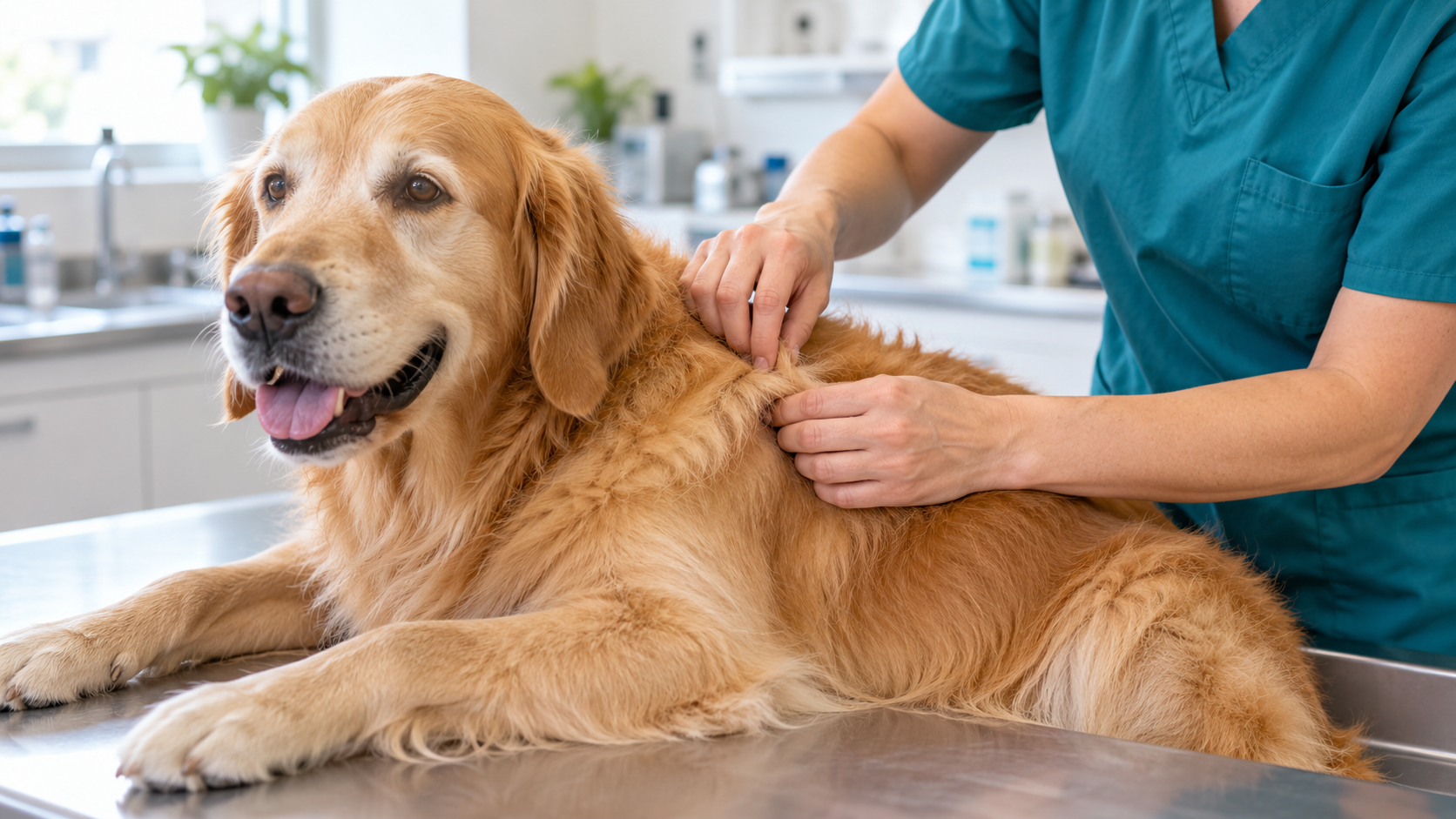
Finding a lump while stroking or grooming your pet can be worrying. Is it harmless? Does it need testing? Should it be removed?
Many lumps in dogs and cats are benign, meaning they are not cancerous. Others need treatment, and some can be more serious. The best first step is to arrange a veterinary examination rather than trying to identify a lump by its appearance alone.
At Vogue Vets, we can assess your pet’s lump, discuss appropriate investigations, and recommend a treatment plan suited to their needs.
What Could the Lump Be?
Lumps can develop on the skin, beneath it, or deeper in the body. Possible causes include:
- Lipomas: benign growths made up of fatty tissue.
- Cysts: pockets containing fluid or other material.
- Abscesses: collections of infection, sometimes associated with a bite or injury.
- Inflammation: swelling caused by irritation or a reaction.
- Skin growths and tumours: these may be benign or malignant.
A soft, movable lump is not automatically harmless, and a firm lump does not automatically mean cancer. Even if your pet has previously had a benign lump, a new one should be assessed on its own.
When Should I Book a Vet Appointment?
Arrange an appointment for any new or unexplained lump, including one that does not seem to bother your pet.
Let your vet know promptly if it:
- Grows quickly or changes in size, shape, or colour.
- Becomes painful, red, hot, or swollen.
- Bleeds, develops a sore, or produces discharge.
- Causes persistent licking or scratching.
- Interferes with walking, eating, toileting, or normal activity.
- Appears alongside changes in appetite, weight, energy, or behaviour.
If your pet is very unwell, has difficulty breathing, or has bleeding that will not stop, seek urgent veterinary care.
How Do Vets Investigate a Lump?
Your vet will examine the lump and ask when you first noticed it, whether it has changed, and whether your pet seems uncomfortable.
An examination provides useful information, but testing is often needed to understand what a lump contains.
Fine-needle aspiration
A small needle is used to collect cells from the lump for examination under a microscope. This is often a useful first investigation and can frequently be performed during a consultation. However, some samples do not provide a definite answer.
Biopsy and laboratory examination
A biopsy involves taking a piece of tissue for testing. Sometimes the entire lump is removed and submitted to a laboratory. Examination of the tissue—called histopathology—can help identify the growth and guide further treatment.
Depending on the findings, your vet may recommend additional investigations before surgery. Understanding the likely type of lump helps the team plan the most appropriate procedure.
Does Every Lump Need Removing?
Not every lump requires surgery.
If a lump has been assessed as benign, is comfortable, and is not causing problems, monitoring may be appropriate. Your vet can explain what to watch for and when it should be checked again.
Removal may be recommended when a lump is growing, repeatedly irritated, uncomfortable, interfering with normal activity, or suspected to be cancerous.
The decision depends on the lump’s type, size, and location, as well as your pet’s overall health. Some complex cases may benefit from referral.
Why Can Lump Removal Be Beneficial?
Even a benign lump can affect your pet’s comfort. It may rub against a harness, catch during grooming, become repeatedly sore, or make movement difficult.
When removal is appropriate, it can:
- Relieve discomfort and irritation.
- Improve movement or everyday function.
- Address recurring bleeding or damage to the skin.
- Provide tissue for a more definite diagnosis.
- Treat certain tumours, although further treatment or monitoring may still be needed.
Assessing a lump early also allows treatment to be planned before it potentially becomes larger or more difficult to manage. Removal does not guarantee a cure for every type of tumour, so laboratory results and follow-up care remain important.
What Can I Do Before the Appointment?
Make a note of where the lump is and when you first noticed it. A photograph beside a ruler can help record changes over time.
Avoid squeezing, puncturing, or applying creams to the lump without veterinary advice. If your pet is licking or scratching it, contact the clinic for guidance.
Lump Assessment and Removal at Vogue Vets
Lump removal can be very beneficial when a growth is causing discomfort, affecting your pet’s daily life, or requires surgical treatment. It is a procedure that can be performed at Vogue Vets.
Our team can assess the lump, discuss testing and treatment options, and determine whether removal at our clinic is suitable for your pet.
If you have noticed a new lump—or a change in an existing one—contact Vogue Vets to arrange an appointment. An assessment is the first step towards understanding what it is and helping your pet stay comfortable.